Parasite Linked To Explosive Diarrhea Illness Identified In Southern Ohio; Ross County Has The Highest Number Of Cases
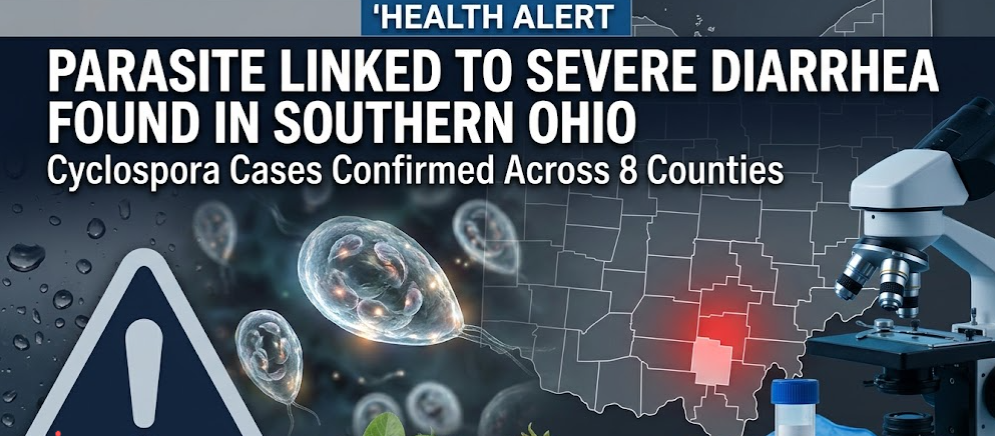
PIKE COUNTY, Ohio — Health officials are warning residents across southern Ohio after cases of a gastrointestinal illness caused by a microscopic parasite continue to be identified throughout the region.
The Pike County Health District, along with neighboring county health departments, is monitoring an increase in cyclosporiasis cases — an intestinal infection caused by the parasite Cyclospora cayetanensis.
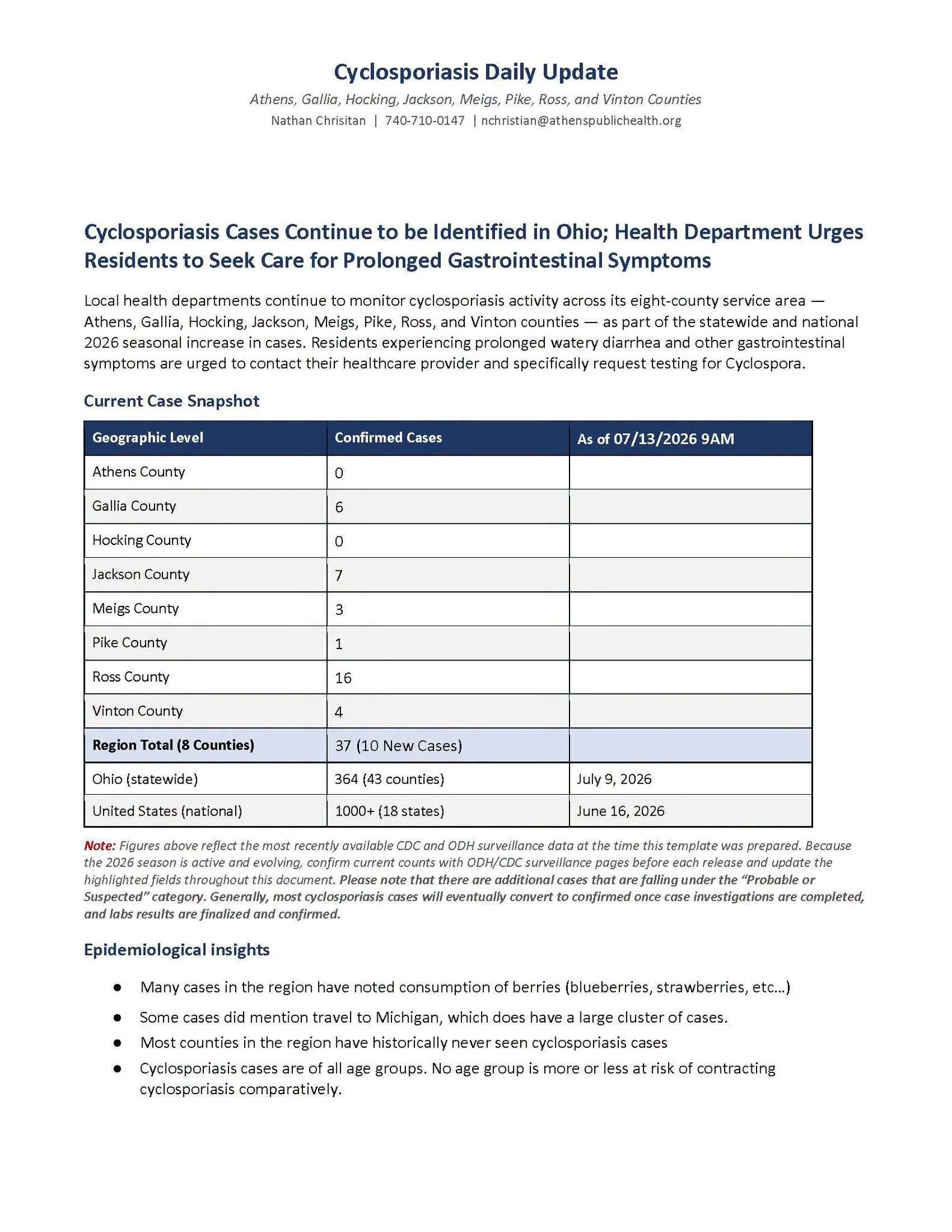
As of July 13, 2026, health officials reported 37 confirmed cases across an eight-county region, including Athens, Gallia, Hocking, Jackson, Meigs, Pike, Ross, and Vinton counties.
Pike County has reported one confirmed case of cyclosporiasis.
Ross County currently has the highest number of confirmed cases in the region with 16, followed by Jackson County with 7 and Gallia County with 6. Vinton County has reported 4 cases, Meigs County 3, and Athens and Hocking counties have reported no confirmed cases.
Statewide, Ohio has recorded 364 confirmed cases across 43 counties, according to health officials. Nationally, more than 1,000 cases have been reported across 18 states.
Health Officials Urge Testing for Prolonged Symptoms
Officials say residents experiencing prolonged gastrointestinal symptoms should contact their healthcare provider and specifically request testing for Cyclospora, as it is not always included in routine stool testing.
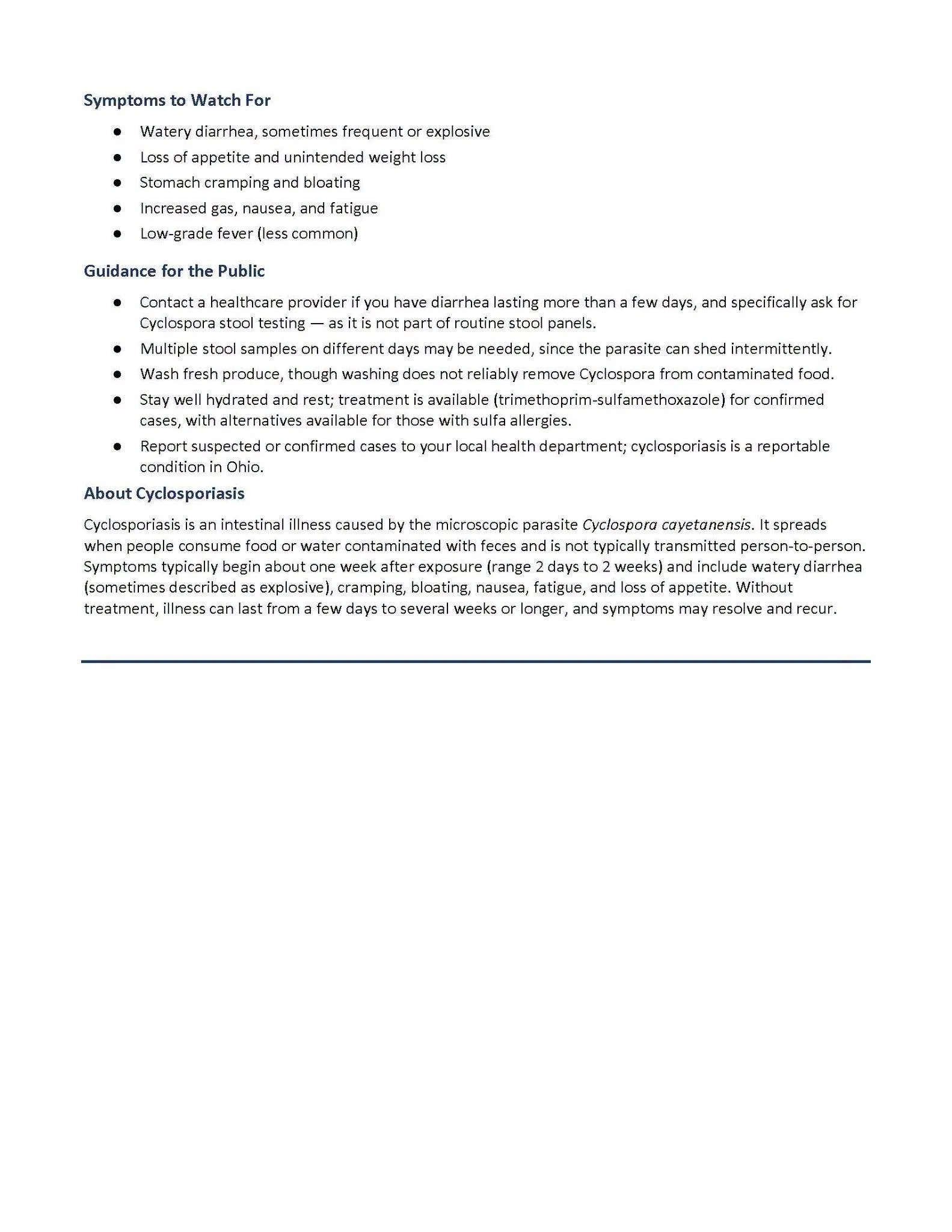
Symptoms may include:
Severe watery diarrhea, sometimes frequent or explosive
Loss of appetite and unintended weight loss
Stomach cramping and bloating
Increased gas, nausea, and fatigue
Low-grade fever in some cases
Health officials say multiple stool samples collected on different days may be necessary because the parasite can be shed intermittently.
Possible Sources Under Investigation
According to the health district update, many reported cases in the region involved people who consumed berries, including blueberries and strawberries.
Some individuals also reported recent travel to Michigan, where officials have identified a larger cluster of cases.
Health officials noted that cyclosporiasis cases are occurring among all age groups and that no specific age group appears to be at higher risk.
What Residents Should Know
Cyclospora is typically spread by consuming food or water contaminated with feces containing the parasite. It is not usually spread directly from person to person.
Symptoms often begin about one week after exposure, though onset can range from two days to two weeks. Without treatment, illness can last from several days to weeks or longer, and symptoms may return.
Treatment is available for confirmed cases, with the commonly used medication trimethoprim-sulfamethoxazole. Alternative treatments may be available for people with sulfa allergies.
Health officials recommend washing fresh produce before eating, while noting that washing alone may not reliably remove Cyclospora from contaminated foods.
Residents who suspect they may have cyclosporiasis are encouraged to contact their healthcare provider and report suspected or confirmed cases to their local health department.